
Launch of the Bristol Centre for Grief Research and Engagement at the House of Commons

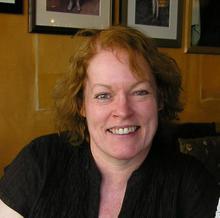
Lucy Selman


By Lucy Selman, Professor of Palliative and End of Life Care, Centre for Academic Primary Care, University of Bristol

Last week (9 December 2025) saw the launch of the Bristol Centre of Grief Research and Engagement at the House of Commons in London. Generously hosted by Christine Jardine MP, the event brought together around 60 people, including grief experts from the UK, Ireland and USA, MPs, charity leaders, doctors, academics, artists and campaigners. All are working, in different ways, to change how grief is understood, supported and talked about in the UK. Being in the room together was a powerful reminder that this work really is stronger when we do it collectively.

The launch event

We were honoured to hear from a brilliant line-up of speakers. Prof. Guy Poppy CB FMedSci, Pro-Vice Chancellor at the University of Bristol, spoke about the value of interdisciplinary … Read more

From Bristol to Milan: A PhD journey through AI, ultrasound & espresso

by Kerstin Nothnagel, Postgraduate researcher and PhD student, Centre for Academic Primary Care, University of Bristol

Montage of photos of Kerstin's time at the Human Technopole, Milan.

I’m a doctoral researcher in the second year of my PhD at the Centre for Academic Primary Care, University of Bristol, focusing on something that feels very timely—and occasionally, just a bit sci-fi: how artificial intelligence can change the way we diagnose and treat illness.

My research lives in the real-world space of primary care, where many diagnostic gaps still exist. One of the things I’m investigating is whether AI-guided ultrasound can support GPs and nurses in diagnosing deep vein thrombosis (DVT) right at the clinic—or even in patients’ homes—without requiring specialist ultrasound skills.

With step-by-step AI guidance and image uploads to a cloud dashboard for remote specialist input, we could speed up diagnosis, reduce complications like pulmonary embolism, and skip the often long and stressful wait for hospital-based imaging.

Sounds promising, … Read more

World Health Summit 2024: Building Trust for a Healthier World

Kirsten Nothnagel

by Kerstin Nothnagel, Postgraduate researcher and PhD student, Centre for Academic Primary Care, University of Bristol

I recently got back from an inspiring and transformative few days at the World Health Summit 2024 in Berlin! Held from October 13-15, the summit brought together over 350 speakers and thousands of participants from across the globe, all united under the theme of “Building Trust for a Healthier World.” The discussions were not only enriching but a crucial reminder of how connected we are in tackling some of the world’s most pressing health challenges.

From pandemic preparedness to climate change, health equity, and the growing threat of antimicrobial resistance, the topics covered were vast. But what truly set this summit apart was the focus on local, community-based primary care as a bottom-up solution to global health issues. Over and over, the message came through loud and clear: real progress happens at … Read more

Co-developing a theory of change to evaluate integrated working in two Locality Partnerships – Part 2

Dr Natalia Lewis


By Dr Natalia Lewis, Senior Research Fellow in Primary Care, Centre for Academic Primary Care, University of Bristol and Researcher in Residence, Bristol, North Somerset and South Gloucestershire Integrated Care Board.

Back in 2022, I started my secondment as a researcher in residence at the Bristol, North Somerset and South Gloucestershire Integrated Care Board (BNSSG ICB). I was tasked with supporting the development of an evaluation framework for two Locality Partnerships.

My first blog and podcast in December 2023, described the process of co-developing theories of change for the Partnership Working, Ageing Well and Dying Well workstreams with stakeholders from the NHS, local authorities and voluntary and voluntary, community and social enterprise sector from the two Locality Partnerships. Co-developed from bottom up, these theories of change incorporated local knowledge and priorities which were linked with the BNSSG ICB population health … Read more

Co-developing a theory of change to evaluate integrated working in two Locality Partnerships – Part 1

Dr Natalia Lewis


By Dr Natalia Lewis, Senior Research Fellow in Primary Care, Centre for Academic Primary Care, University of Bristol and Researcher in Residence, Bristol, North Somerset and South Gloucestershire Integrated Care Board.

This blog is in two parts. Read the second blog on the project final stage and report.

Since December 2022, I have been working part-time as a researcher in residence at the Bristol, North Somerset and South Gloucestershire Integrated Care Board (BNSSG ICB).

The Researcher-in-Residence (otherwise known as Embedded Researcher) model involves co-locating researchers within non-academic organisations to enhance the role of research evidence in informing decision-making. I applied for this job because I wanted to understand how decision-making in the real-world health system happens and how my research skills and expertise can be used to make local policies and practices evidence informed.

My post was established to support development of an evaluation … Read more

Lessons from lockdown: NHS general practice changes and public perceptions


by Dr Lorna Duncan, Centre for Academic Primary Care, University of Bristol


How did England’s National Health Service (NHS) change at the start of the COVID-19 pandemic?

Dr Lorna Duncan and Kelly Cheng wrote two companion pieces for F1000Research, exploring how the NHS modified general practice (GP) consultations to minimize the spread of COVID-19 and what the public thought about those changes. F1000Research spoke to Dr. Duncan about what they discovered and the potential implications for primary care. You can read the full blog on their website.… Read more

The aim of general practice: can it be explained in one sentence?


by Professor Alastair Hay, Centre for Academic Primary Care, University of Bristol

This article was first published in the British Journal of General Practice.

As a teacher and researcher, I have learned that, unless my aim is clear, I will confuse myself, my students, my clinical colleagues, and my co-investigators. And yet, as a GP I often wonder, ‘Can I summarise my objective?’

The June edition of the UK’s British Journal of General Practice included articles describing an existential crisis in primary care (asking ‘What is the essence of general practice?’), a novel study describing some of the most complex work undertaken by GPs (largely invisible to most people most of the time), and other articles asking how we should deliver care post-COVID. However, the common thread for me was: ‘What is our aim?’

And why is it important to be able to explain our … Read more

How UK newspapers made sense of COVID-19 related death and bereavement

Headshot photos of Dr Ryann Sowden and Dr Lucy Selman


by Dr Ryann Sowden, Research Assistant, Population Health Sciences, Bristol Medical School and Dr Lucy Selman Senior Research Fellow, Centre for Academic Primary Care, University of Bristol

In a paper published recently in PLOS One, we explore the coverage of COVID-19 in British newspapers with a focus on key media narratives about the virus.

COVID-19 and media narratives

COVID-19 has caused over 120,000 deaths in the UK, leaving over a million people bereaved. Although death is often described as a societal taboo in British culture, it remains ever-present in the public realm of news and media which COVID-19 has dominated for the past 12 months.

In the spring of 2020, as the COVID-19 pandemic began to claim a large number of lives in the UK, newspapers reported on the threat, damage and bereavement caused by the virus, as well as providing a … Read more

Should we be concerned about declining continuity of primary care?


by Peter Tammes, Mairead Murphy and Chris Salisbury, Centre for Academic Primary Care, University of Bristol

Decreasing trend of continuity of care

Seeing the same GP over time is highly valued by most patients and GPs in the UK. This is known as ‘continuity of care’ and it is linked with lower healthcare costs, more satisfied patients, fewer emergency hospital admissions and even with reduced mortality.

Given these multiple benefits, one would expect it to be highly prioritised. However, our recently published study in the British Journal of General Practice shows that continuity of care declined steadily between 2012 and 2017. On average, the percentage of patients who reported to have a preferred GP declined by nine percentage points and the percentage who can usually see their preferred GP declined by 10 percentage points.

Is decreasing continuity of care a concern?

Decreasing continuity is … Read more

Care homes have long been neglected – the pandemic has shown us how bad things are


by Dr Lucy Pocock, GP Career Progression Fellow, Centre for Academic Primary Care, University of Bristol

Before COVID-19, there were around 10,000 deaths in care homes in England and Wales every month. Then, between March 27 and April 24 2020, the number more than doubled to 23,113.

The Office for National Statistics (ONS) later reported 17,422 deaths of care home residents from COVID-19 between the end of March and June 5, accounting for 47% of the total number of deaths caused by the virus.

So it is unsurprising that the pandemic has led to much greater interest in what happens inside care homes. As well as the significant increase in the number of residents dying, concerns have been raised about a lack of access to testing and personal protective equipment (PPE), the discharge of coronavirus-positive patients from hospital to care homes, rationalisation of the health … Read more